Dude, where's my cow?

Let’s do this one with a fictitious person. Someone made up. Unlike anyone we know and yet eerily similar, too. I’ve got just the person in mind. Their name is Harrit. I’ve never even met a “Harrit,” though I did hear the name once. Harrit is perfect.
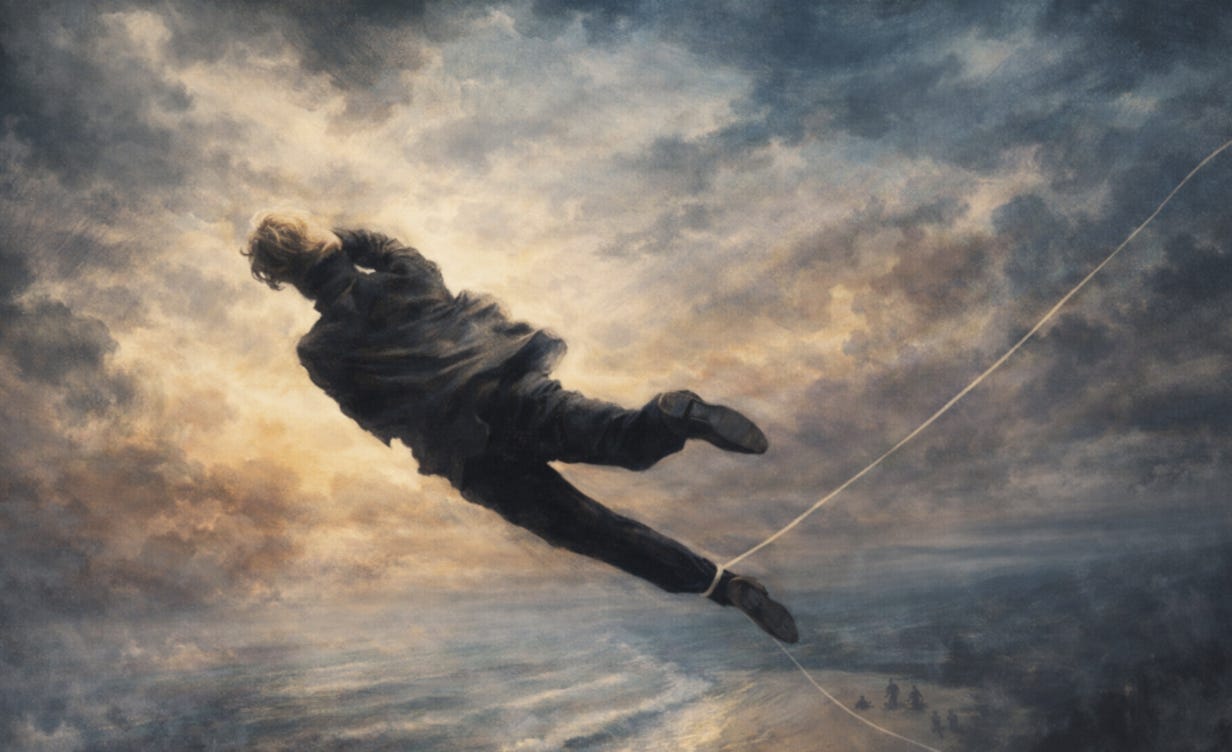
See Harrit up there flying like a kite in the imaginarium ether. We’ll get the rope. Down to earth with you, Harrit.
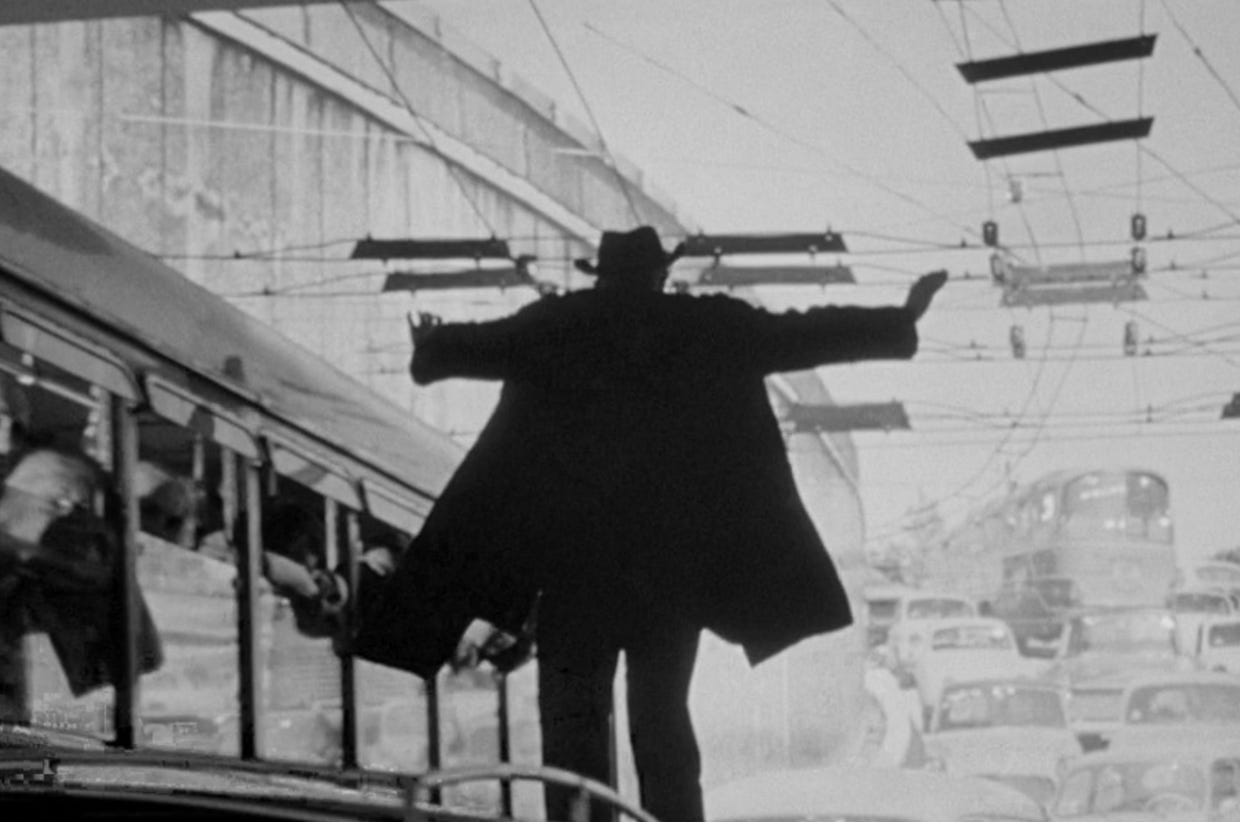
Let me orient you, readers and Harrit. I’m your omniscient narrator. Harrit, you’re a middle-aged lawyer standing on H Street in Washington, DC. You’re at the edge of Lafayette Park, across from the White House. Unlike the British in 1814 who came from Maryland northeast of the Capitol (which they burned) and then down Pennsylvania Avenue to the White House (which they also burned), you came from the north. Two blocks. From a hotel. And you just wanted to see the White House. And even Lafayette Park. You like those hero-on-a-horse statues. Especially that one of Grant near the Capitol with his hat brim low looking like a rider on the pale horse of death.
So there’s Harrit. Block from the White House. Edge of Lafayette Park. In the year of our Common Era 2026. The month is May. It’s sunny but surprisingly chilly. Harrit has stopped mid-block. He stares blankly at the park. People supporting labor unions move around his staticity. They have a march to get to. Some of them claim to be Communists of some flavor. Harrit’s not listening. He’s at a fenced off park full of equipment and some workers and holes in the ground.
What’s wrong? I’m pretty sure I know since I’m the omniscient narrator, but let me hear it from you, Harrit.
“It’s all closed off. God, it looks like a disaster area.”
And you just wanted to stroll through it and think about when you lived here many years ago. You worked a block away from the White House. You were remembering that.
“I was.”
You were young, ambitious, excited to be in DC. Thinner.
Harrit smiles. Thinly. Harrit starts to cry.
I know she called you “maudlin.” You just have very little margin.
“Almost none. The thing with my son, my dad, my—”
I know. How about try walking around the park. The construction. And the security perimeter. Let’s walk. There we go. Nope, you can’t turn at the edge of park. Trust me, it’s fenced off, too. Another block, then you can turn south now.
“Is that the Federal Circuit?”
No. That’s on the other side of the park.
“I guess I always thought it was there. Never wanted to find out. Maybe I’ll walk to the Corcoran Museum. I remember going there. Bierstadt, Moran, Charlie Russell. There was one painting I remember where you could see the wind on the Indians and sagebrush with these mesas in the background. Places I’ve seen. Lived near. I thought he painted it well. Realistic in how someone actually sees it and feels it. The way the moon illusion is what’s real and a photo is not. The way ‘reality’ is always filtered and somewhat hallucinated, which makes art more real. Good art, anyway. Art I like.”
It’s gone.
“The Corcoran?”
The Corcoran you remember is gone. Now it’s part of an MFA program with student exhibits. It’s mostly projects about gender identity, racism, and immigrants. Or at least today. It changes. Actually, though, it’s usually something like that.
“Oh. What’s this place? It says it has a state fair exhibit?”
That is the Renwick Museum. Part of the Smithsonian. A very historic place. America’s first structure built as an art museum. It was once the Corcoran Gallery. It was also the Court of Claims for many years. Jacqueline Kennedy Onassis was instrumental in—
“Why not?”
And into the Renwick Gallery went Harrit. Let’s give some space and wait outside.
* * *
Well, how was it? I’m interested to hear you describe it. I can see you’ve exceeded your margin again, but you’re smiling. I wanna know, have you ever seen the rain coming down on a sunny day?
“It was kind of f&*ing perfect. A bouquet of porcelain corn dogs. A portrait of Taylor Swift made from pieces of corn and stalk or wheat or something. A big pyramid of pickling jars that reminded me of my grandma’s cellar out on the farm. The one with the aleph.”
That brought the tears again?
“That and the cow.”
Tell me about the cow.
“It’s this life-sized dairy cow sculpted out of 600 pounds of butter. Like some of the other exhibits, you come around a corner with no clue what will be next because it’s all so random and odd and BOOM it’s a big cow made out of 600 pounds of butter. I couldn’t stop staring at the thing and marveling. I circled it several times. Iowa State Fair. Some family has been doing butter sculptures like this for decades. Passing it down generation to generation. The thing is refrigerated inside its glass in the museum.”
You do love butter.
I do.
And you did grow up around cattle.
I very much did.
But you also thought something you’re embarrassed to admit.
That … yes. I did.
Why don’t you admit it, at least to me. I already know, of course, but I think it may be helpful for you to say it. To own it. Even if just a passing thought, but something that definitely arose for you in front of that cow.
“I don’t want to. I’m in a state. Anxious. Sad. No margin. Walking around like the world’s most sensitive Geiger counter for emotional radiation.”
But you are somewhat fascinated by what registers. The needles are jumping. Emotional territory can be mapped. With a map, maybe you’re not lost.
“I would have thought omniscient narrators wouldn’t mix metaphors like that. Geiger counters and maps?”
It’s not a mixed metaphor, and don’t hide with quips. Say it, dammit. What did you think in front of the butter cow?
“I think sculpting a cow like this would mean more to me than anything I’ve done in my legal career.”
And why are you in DC?
“A reunion of law clerks at the U.S. Supreme Court.”
And what do you most want to do right now given we can’t sculpt a butter cow?
“Go to the Corcoran Museum that doesn’t exist anymore and see that Charlie Russell painting with the Indians and the sagebrush and the mesas and the wind.”
That’s gone. Just like the White House you remember where you could walk near it all the time. What’s something you’ve always meant to do near here, but you never made it out there? Something you were hoping to do with some kindred spirit, but it just never happened.
“Visit F. Scott Fitzgerald’s grave in Rockville, Maryland.”
Let’s go. You and me, kid. It’s three blocks from the Rockville Metro station. And you should take some ibuprofen before that ride.
* * *
It took several stops, but Harrit eventually got a seat and all remaining aboard shot out of the underground tube to an elevated view of afternoon suburbia. More stops. The car emptied down to Harrit and a woman several rows behind who was in a cellular brawl that culminated with “I’ll kill you, b^&*. I’ll f%^&ing kill you.” Several times over. Then off she went, too, and Harrit was alone. He looks more peaceful now. Ever since the cow. He’s surveying Maryland-urbia. Mostly red bricks and treetops. So many trees.
“They will reclaim the world.”
Yes, the trees.
“And grass, weeds, bugs, bacteria, moss, mold, ferns, wind, rain, weather. I like seeing Nature’s persistence, breaking through and wearing down. I’m not as crazy about the hazy sky and how it breaks things down. I know it’s part of it, too. Trees might even like it. But it’s an ick in the air.”
You like what comes up from the earth and not air ick—death or reclamation from above.
“I don’t like death from above. And having bad, menacing air, this formless thing that impairs your vision and feels all ominous and unnatural even if it’s not actually unnatural.”
What’s unnatural? People building things is natural for people.
“I don’t know. Feels different. Like we’re conquering everything, commanding and controlling it. Winning some competition or game. It’s not a game. Or else it’s some really long game that the more natural stuff will win. Or falling apart wins. Entropy for the win. But I don’t think it’s a game at all. Not a competition. No winners. I don’t even like competition.”
You’re remembering that question your son asked you. The sports one.
“If you could be world class at a sport, but with no winning, fame, or fortune, just world class ability, what would you pick?”
That’s the one. Well, what would you pick? Weird thing about omniscience, it’s actually a bit glitchy on stuff like this. Too artificial and hypothetical.
“My first thought was tennis.” Harrit whispered that aloud with soft green eyes looking a long distance out the train over trees not falling in the woods.
“Something where the pure execution is beautiful and tactile. Soft hands. Strings. Spin. Control of the ball. Drop volleys like a handshake briefly held. I could see golf, pitching a baseball, or Formula 1 driving. Or at Le Mans at night. With tennis, red clay. Golf, all those Monterey Peninsula courses. The only way I would pick cycling would be if it meant climbing up Alpe d’ Huez. Pure ability, never. It hurts the same, you just go faster. I need the hands-on feel and intricate execution.”
Hands on. Tactile. Execution. The butter sculptors used their hands. It also reminds you of music, which you’d pick over any sport.
“I would. Having that higher facility to play the elite things well is something I could do all alone and derive enormous contentment. Just being able to do it. It doesn’t even need to be world class. Not at all.”
You like these hypos where the question is framed in terms of what you would want all alone. Why make that a condition?
Isn’t that ultimately what we’re solving for?
What about writing? Let’s say writing were a world-class ability you could have but without any readers, much less fame or fortune. Would you pick that? Is writing like music where you could do it only for yourself and still be content or complete?
“That’s a good question. We’re here. I need to get off the line. I’ll think about that. A more difficult call than music, but perhaps closer than you might imagine.”
I’ll let you go there alone. It’s three blocks. Turn left out of the station. It’s a small church with a cemetery next to it. You can’t miss it.
* * *
It was moving for you. I wanna know—
“Very much so.”
So if you can write The Great Gatsby only for yourself, would you choose that?
“I’m tired of hypotheticals and being alone.”
Would it be better if it were sculpting a cow out of butter?
Harrit paused with those faraway eyes again, the thin smile. He walked silently to a bench and sat down. Still with the eyes. Still with the smile.
“I know what you’re doing. Don’t think I haven’t thought of it. I’m grasping at things. If I can get X or do X or be an X person, then I’ll be happy. I think about it all the time. When in the history of evolution did it start that we wanted to be someone else? It was really something just to have a ‘self,’ this inner world. A world of projections and replays and simulations. And it had barely fired up, we’d just started to understand that the figure reflecting in the water was us, and in the blink of an eye we wanted something else. Animals could think that, too. Some young buck gets run off by some bigger, stronger buck, and the outcast is thinking, ‘I really want to be that guy.’ But maybe a deer only thinks, ‘Sex good. Being attacked bad. Run away.’ Humans at some point made the leap. I wish I had that. I wish I were him. I’d be happy if I had that or were that person. And the simulation machine hummed and whirred and motivated us to imagine, to pursue what we imagined, to always be pursuing what we imagine and never stopping, and here we are. All this stuff. Not happier.”
But you would love to sculpt things, paint things, write even a personal Great Gatsby, or play practically anything on a piano or guitar?
“I would love all those things. But I also feel the grasping. That Buddhist thing you sent me years ago is always fairly close to me. It was with me on this bench before you even went there. ‘Nowhere to go. Nothing to do. No one to be.’ I do believe there’s a lot of wisdom in that. But sometimes it leaves me wondering, what’s the point of doing anything? Even loving things and pursuing what you love.”
It says, “Nothing to do.” It doesn’t say “do nothing.”
A long, vagus-soothing sigh for Harrit. Then talking softly to his shoes at a Pledge of Allegiance pace.
“And it says … ‘No one to be’ … So be nothing? … Want nothing?
There are people who embrace that and live in caves, meditating for years. Nirvana. Nibbana. At least Samadhi. Or jhanas. Nowhere. Nothing. No one. Rinse. Repeat. No grasping of any kind but also not doing anything or even being with people.
I’m sorry I ever had a thought about a butter sculpture cow observable by an omniscient narrator.”
Forget the cow. Why did you go to F. Scott Fitzgerald’s grave?
“Don’t do this. Don’t make me say it.”
Harrit, it’s all arising and passing. But isn’t it interesting what arises? Can’t you just see it and be curious about it? Corn dog ceramics. Corn stalk Swift. Pickle jar pyramids. Butter bovines. Wind in western lands. Fitzgerald funeralia.
“Do you actually know how everything turns out? What happens to me and everyone else and everything there is? Do you know that?”
Harrit. Kid. You’re just a kid to me. Sometimes you’re just a kid to yourself. Harrit, Harrit, Harrit. What I know of your unrevealed “narrative arc” or anyone else’s would make no sense to you. Speaking strictly analogically, and this is a real stretch but you did ask and I care, it’s all big movements and directional flow toward edges that aren’t edges that you wouldn’t understand. Like that line misattributed to Stalin that one death is a tragedy and one million a statistic. My omniscience on what you asked about is more of the statistical variety. Again, crudely using that analogy. Think water molecules to drops, streams, rivers, oceans. It’s at the ocean level. Or from sub-atomic particles to the planet Jupiter. Old Jupiter whirling around is of a size and sweep that registers for the narrative-arc questions. But the individual stuff, like our day today, I know the things you know and then other things arise for me from somewhere and I know them. But I’m not LaPlace’s Demon at the individual future level, if that helps. And I’m not some electron microscope of omniscience.
“That wasn’t helpful at all.”
Even if I could help you on that, I wouldn’t. Harrit, I think it’s important that you find some way to accept what you don’t know or control and perhaps more importantly what you will never know or control. You ask good questions, and they expose things that don’t make sense or don’t have meaning. Or any meaning for you, at least. (You might stop judging others on that.) And that’s really important to know. Better late than never. It’s definitely good to know what isn’t the answer for you. But grasping for real affirmative answers, especially on nebulous, largely linguistic philosophical questions and even more especially when you know deep down you will never know, is a life of suffering a lot of times. Unless it’s just curiosity or kinship with others thinking the same thoughts.
You’ve got things you love, and they are registering like crazy in your presently skinless state. You can understand that there’s nowhere to go, nothing to do, and no one to be and still do what you love and be with people and animals and butter animals and nature and paintings and dead novelists or whatever that you love and go to places that you love. Go and do all of that and be nothing. Let it all flow right through you like the wind in that painting, and I’m pretty confident you’ll be fine.
“So we should add after ‘No one to be’ something like ‘No answers to be found’? Wait, where’d you go?”
* * *
“And can I get a name for the reservation?”
“Eric.”
“Sorry, say that again.”
“Er-ic!”
“I’m sorry it’s so loud in here.”
“AIR! ICK!”
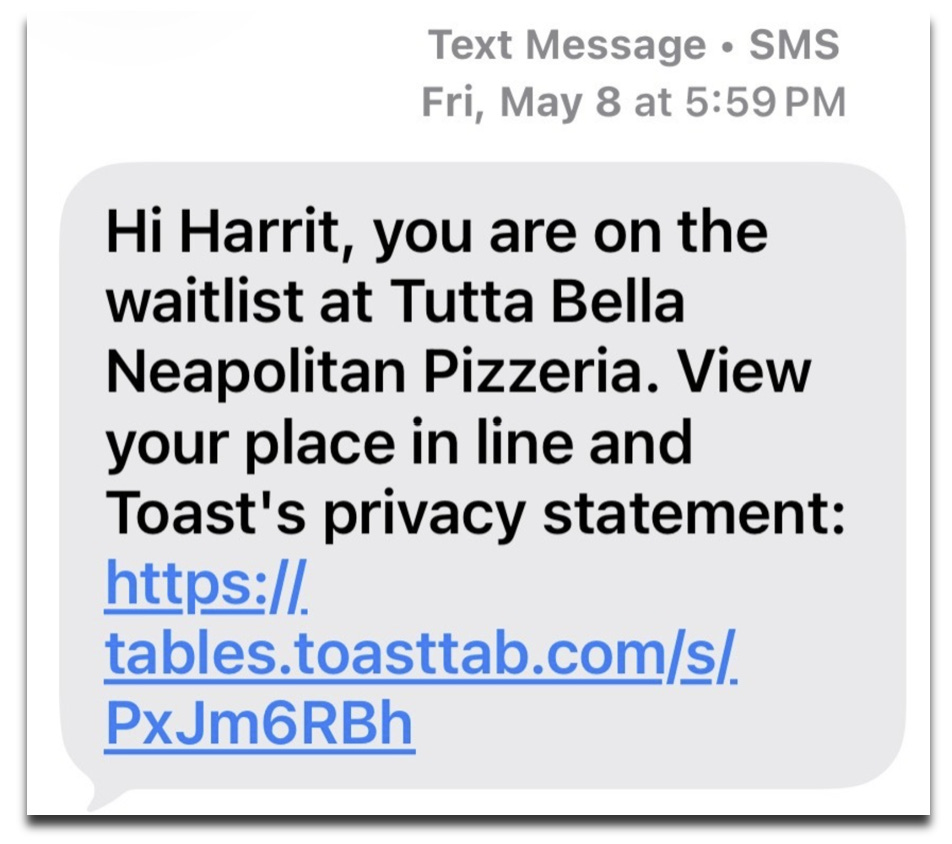
“Got it, thank you. I’ll text you when your table is ready.”